Electronic boards, from schematic to the field.
I’m Geoffrey Fournier, an independent R&D engineer: I design and verify electronic boards, their radio and their firmware, through to production. My specialty: battery-powered field devices, from wildlife trackers to research instruments at sea. 13 years in the trade, methods from regulated industries, and a passion for wildlife and the environment.
Start with a fixed-price design review: from €1,600 excl. VAT, report in about a week. Then design and build by milestones, or team extension on a daily rate.
or write to contact@coxpert.com
For research labs, conservation NGOs, hardware startups and regulated industries. Work with Arribada, CLS, CNRS (LIRMM), Ifremer and IDOCEAN.
On screen: Linkit v4, an open-hardware satellite tracker board (CERN OHL), simplified. Oscilloscope traces are illustrations.
- battery connector
- Battery current
- Real measurements delivered in the test reports.
- Discipline
- Electronics, radio and embedded R&D
- Experience
- 13 years, since 2013; independent since 2019
- Standards practiced
- ISO 13485, IEC 60601, IEC 62304; RED, FCC
- Location, languages
- Réunion Island, France (UTC+4); English, French
- Trackers
- Battery current
- A tracker sleeps most of the time; its battery life comes down to the sleep current and a few peaks.
- Built
- Linkit v4, Argos SMD module, dive tracker, bird tracker
- Animals
- Sea turtles, birds
- Networks
- Argos, Kinéis, LoRa, Bluetooth; GNSS positioning
- With
- Arribada, CLS
- Since 2013
- 13 years
- Regulated industries first, in roles held before CoXpert; then wildlife and ocean projects, as an independent.
- 2013 to 2015
- Aerospace and rail: Safran; Systerel, for Alstom
- 2015 to 2018
- Medical devices: Oscadi
- Since 2019
- Independent: marine research; wildlife tracking with Arribada since 2023
Electronic boards
Boards designed to last for years in the field and to be built in volume: from a 2 × 2 cm module to a dense board of 8 layers or more, delivered with a production package ready for the assembler.
- Power budget
- Battery current
- Battery life is estimated per state and per day from the schematic, then measured on the real board.
- Budget
- Per state and per day
- Sized for
- Target battery life, energy sources available
- Floor
- Sleep current of the whole board
- Multilayer routing
Schematic and layout, rigid or flex, RF lines and antenna area included; parts placed for the enclosure and for assembly.
- layer stack
- 6 layers
- Delivered: Altium or KiCad sources, and the 3D model (STEP) for the enclosure.
- ECAD
- Altium Designer, KiCad
- Layers
- 2 to 8 and more, HDI, rigid or flex, controlled impedance
- Range
- From the 2 × 2 cm Argos SMD module to dense system boards
- Complex boards
- FPGA beamformer for an ultrasound scanner; Raspberry Pi CM5 I/O board (PoE Ethernet, 4 PCIe slots, 5G, satellite)
- Low power
Supplies and sleep modes sized for the target battery life, then measured.
- power converter
- 3.3 V rail
- Checked: whole-board sleep current measured, then compared with the budget.
- Converter
- TPS63901 buck-boost, 75 nA quiescent
- Power domains
- Load switches, TPL5111 timer (35 nA)
- Charging and harvesting
Solar, wireless, Ethernet (PoE), piezoelectric or USB power; charging restarts from a dead battery.
- battery charger
- Charge current
- Checked: cold start from a dead battery.
- Sources
- Solar (MPPT), Qi wireless, PoE, piezoelectric, USB-C
- Chargers
- Linear, switching, energy harvester (SPV1050)
- Protection
- ESD, undervoltage, battery voltage monitoring
- Sensors
Every common sensor family, from motion and depth to light, infrared and ultrasound: the board wakes on an event, measures and logs it.
- accelerometer
- Motion
- Checked: sensor current in sleep, wake-up thresholds.
- Families
- IMU, magnetometer, pressure and depth, temperature, light and IR, IR beam, ultrasound, vibration, current
- Wake-up
- Reed or TMR switch, saltwater, motion, IR, RTC
- Memory
- NOR flash (SPI, QSPI), EEPROM, SD, SRAM; DMA, cache
- Buses
- I2C, SPI, QSPI, UART, USB, CAN, RS-485, I2S, SDIO, PCIe, Ethernet
- Production files
A complete manufacturing package, then follow-up with the assembler: BOM cost and availability, parts shared across projects, board acceptance.
- top silkscreen and assembly marks
- Assembly
- Checked: the boards received are tested, with IPC-A-610 acceptance criteria.
- Delivered
- Gerbers, BOM, assembly drawings, STEP
- BOM
- Optimized across projects: shared parts, second sources, cost, availability
Radio and antennas
Satellite, cellular, long-range radio, Bluetooth, or no radio at all for a logger read on site: the choice depends on location, cost and energy. Antenna and RF chain are tuned, then checked in the field.
- Field trials
- 401.65 MHz
- Link tests prove the antenna where the device will actually live.
- Tests
- Bench first, then field
- Checked
- Messages received, time to first fix, range
- Delivered
- Test results
- Antennas
Choice, placement, ground plane and enclosure; matching measured, not estimated.
- GNSS antenna (ceramic patch)
- 1575.42 MHz
- Checked: antenna matching (S11) measured with the VNA.
- Types
- Ceramic patch, chip, printed (PCB), whip, helical, dipole and monopole, external on u.FL or SMA
- Measured
- VNA, S11, impedance matching
- Tuned
- Ground plane, enclosure, placement
- RF chain
Filtering, amplification and matching between module and antenna: every decibel lost costs range and battery.
- RF connector at the satellite module output
- 401.65 MHz
- Checked at the connector: output power, matching and harmonics.
- Matching
- 50 Ω, pi network
- Filtering
- Analog (SAW, LC, active) and digital (FIR, IIR); harmonic rejection
- Amplification
- PA and LNA from the link budget, up to 26 dBm on the Argos SMD module
- Instruments
- VNA, spectrum analyzer
- Radio modules
Radio modules that are already certified: satellite (Argos, Kinéis, Iridium), LoRa, Bluetooth, GNSS; cellular (LTE-M, NB-IoT) on request.
- satellite radio module
- Band scan
- Checked: the real link, with messages received in the field.
- Built
- Argos, Kinéis, BLE, LoRaWAN 868 MHz
- Positioning
- GNSS, u-blox M10
- Also
- Iridium (worked with); LTE-M, NB-IoT on request
- Integration
- Certified modules (RED, FCC); Argos SMD module pre-certified by CLS
- Coexistence
Several radios on one board, placed and routed so that none deafens the others.
- the three radios and their ground planes
- 2.4 GHz
- Checked: GNSS C/N0 with Bluetooth active, Argos messages received.
- On one board
- BLE 2.4 GHz, GNSS L1, Argos 401 MHz
- Isolation
- Distance, ground planes, via stitching, filtering
- Risks
- GNSS desensitization, harmonics, blocking
Embedded software and tools
The firmware turns a board into a product: it reads the sensors, drives the radios, manages power and updates in the field. Desktop and web tools configure the device and read back its data.
- Power management
- Battery current
- The board sets the floor, the code sets the average.
- Sleep
- System OFF (nRF52), Stop 2 (STM32WL)
- Wake-up
- RTC or GPIO
- Firmware decides
- When to wake, how long to listen, when to transmit
- Bluetooth microcontroller module
- Battery current
- Examples: Linkit v4 and Argos SMD module firmware, open source on GitHub.
- Languages
- C, C++, Python, TypeScript
- Environments
- Bare-metal, Zephyr, FreeRTOS, ESP-IDF, Nordic SDK, STM32 HAL
- Beyond MCUs
- FPGA (beamforming), DSP (vibration analysis)
- Firmware
Written for the microcontroller’s constraints: sleep, real time, updates in the field.
- Bluetooth microcontroller module
- Battery current
- Delivered: documented source code in a Git repository.
- MCU families
- Nordic nRF52 and nRF53, STM32 (F, L, WL), ESP32, RP2040, PIC, AVR, MSP430, EFR32
- Cores
- Arm Cortex-M0+ to M4F, multicore; FPGA for signal processing
- Low power
- Deep sleep modes, power domains, RTC or GPIO wake-up
- Updates
- DFU bootloader over UART, SPI or Bluetooth
- Drivers
Each sensor and radio module speaks its own protocol; reusable drivers let the microcontroller talk to each one.
- Argos module debug port
- UART
- Delivered: reusable drivers, like the Zephyr driver for the Argos SMD module.
- Techniques
- DMA, interrupts, cache, low-power peripherals
- Protocols
- AT commands, UBX, BLE GATT
- Drivers
- Kinéis library (STM32WL), Zephyr Argos SMD driver, ST and Bosch sensors, u-blox M10
- Tests
Code tested on a computer at every change, then on the board.
- MCU debug and programming port
- SWD
- Example: the Argos SMD module firmware, whose tests are in its public repository.
- On the desktop
- 42 unit suites, gcc and ASAN
- On the board
- DFU integration tests over UART and SPI
- CI and docs
- GitHub Actions, Docker, Doxygen
- Tools
Desktop or browser apps to configure the board, update it and read its data.
- USB connector
- USB
- Delivered: configuration and read-back tools, with their sources.
- Desktop and web
- Python, TypeScript, React, Electron
- Connections
- USB serial, Web Serial, Bluetooth LE
- Functions
- Configure, test, update, read back
- Examples
- pylinkit (Bluetooth), Arribada platform (web and desktop)
Validated by measurement
A board is validated when measurements confirm the specification, on the bench and then in the field. The method comes from medical devices, aerospace and rail: written requirements, traceability and tests at every milestone, as a V-model, in agile iterations, or both.
- Estimate, then measure
- Battery current
- Any gap between estimate and measurement is explained in the test report.
- Estimate
- Budget per state and per day, from the schematic
- Measured
- Current profile per state, on the real board
- Profilers
- PPK2 up to 1 A, Otii beyond
- Medical, aerospace, rail
- Ultrasound echoes
- Roles held before CoXpert.
- Medical
- Oscadi: Oscult ultrasound scanner, hardware lead, EMC tests passed, CE marking in progress
- Aerospace
- Safran: aircraft engine vibration monitoring
- Rail
- Systerel, for Alstom: station remote control
- Requirements
Requirements written together and linked to their tests; each milestone closed by a review.
- board outline and mounting holes
- 70 × 35 mm
- Delivered: requirements, test plan and traceability matrix.
- Written
- Requirements, architecture, test plan
- Traceability
- Matrix linking each requirement to its test
- Cycle
- V-model, review at each milestone
- Quote
- Scope, deliverables, milestones, price
- Design rules
Boards drawn to IPC standards, easy to build and test; code to strict rules, analyzed and reviewed.
- programming port and test points
- IPC-2221
- Checked: by checklist at each milestone review, and by static analysis for the code.
- Boards
- IPC-2221 widths and clearances, IPC-7351 footprints
- Manufacture and test
- DFM, DFT: test points, programming access
- Code
- MISRA C-style coding rules, static analysis, code reviews
- Bench verification
Bring-up supply by supply, each function checked, power budget measured per state, any gap explained.
- test point
- Power-up
- Checked: current limited at first power-up, so assembly faults show up on the bench, not in the field.
- Instruments
- Oscilloscope, spectrum analyzer, VNA, logic analyzer
- Power
- PPK2 and Otii current profilers, programmable supply
- Debug
- J-Link, ST-Link, Tag-Connect on the board
- Result
- Real battery life, in the test report
- Field validation
On the animal, at sea, at a research station: link, positions and battery life checked where the device lives.
- radios and battery connector
- Link
- Validated against the requirements, in the device’s real environment.
- With
- Partners on Réunion Island, or on your site
- Log
- Positions, voltages, events
- Then
- Firmware adjusted, new campaign
- Production tests
A test bench, delivered with the board, programs, checks and logs every board, or a sample per batch.
- Argos module programming port
- Serial number
- Checked: every board, or a representative sample of the batch, before it leaves.
- Bench
- Programming, functional test, serial number
- Plan
- 100% or a representative sample, by batch size
- Where
- At the assembler or on your premises
- Records
- Python scripts, one report per board tested
Quality and standards: every result traced to a requirement and a test report. Standards practiced: ISO 13485, IEC 60601, IEC 62304 (medical, on the Oscult ultrasound scanner); RED for CE marking, FCC, ETSI EN 300 220, EN 301 489 (radio and EMC); IPC-2221, IPC-7351, IPC-A-610 (boards). Aerospace: work within a DO-178C and DO-254 framework. Practices: MISRA C-style coding rules, static analysis, DFM and DFT.
Three offers
A fixed price when the scope is known, a quote by milestones for a whole device, a daily rate for open-ended needs.
Fixed price
Design review
Reviewed from your files (Altium, KiCad or PDF): architecture and technical choices, schematic, layout, BOM (cost, availability, alternatives) and power budget. Delivered: a written report, each issue located by sheet and designator and ranked (blocking, to fix, advisory), then a call to walk through it. Firm price and delivery date confirmed in writing after reading your files.
Request a review- Focused
- One area: €1,600 to €2,400 excl. VAT, about 1 week
- In-depth
- Whole board, DFM and DFT: €4,000 to €7,000 excl. VAT, 2 to 3 weeks
- Urgent
- Priority slot, +50 %
Included: one check of your fixes, within 30 days of the report.
Custom quote
Design and build
From requirements to production files: architecture, schematic, layout, prototypes, bring-up, firmware, tests and field trials, then manufacturing follow-up if you wish. First milestone: a fixed-price scoping phase (requirements, architecture, estimated power budget, firm quote for the rest), deducted from the project if it goes ahead. A board designed elsewhere starts with an in-depth review.
Discuss a project- Milestones
- Scoping, schematic, layout, prototypes, trials, final package
- Delivered
- Sources, Gerbers, BOM, firmware repository, test reports
- Price
- Scoping €1,600 to €2,400 excl. VAT (deducted), then a written quote by milestones
Each milestone closes with a review and the files delivered to you.
Daily rate
Team extension and consulting
A period inside your team, advice on an architecture or a component choice, or training for your engineers.
Discuss team extension- Format
- Daily rate, for a set period, in a written quote
- Topics
- Boards, radio, firmware, test benches, method
- Where
- Remote, from Réunion Island
Working hours adapted to your team’s time zone.
Review prices: a focused review (schematic, power, RF, layout or BOM) depends on complexity; an in-depth review before production, on the board (layers, radios, HDI or flex). Several boards or a complete system: quoted on request. Lead times count from complete files. A focused review’s price is deducted from an in-depth review or a project ordered within 30 days.
Commitments: a written quote before any work; an NDA before any file exchange, if you wish; design, code and test results are yours, or published open source if you prefer. CII approval (French innovation tax credit for SMEs, on CoXpert’s invoices): renewal in progress, status on request.
Work
Open-source projects, all for Arribada, with their GitHub repositories; a name without a link is not published yet. For other clients and employers: the project and the role only.
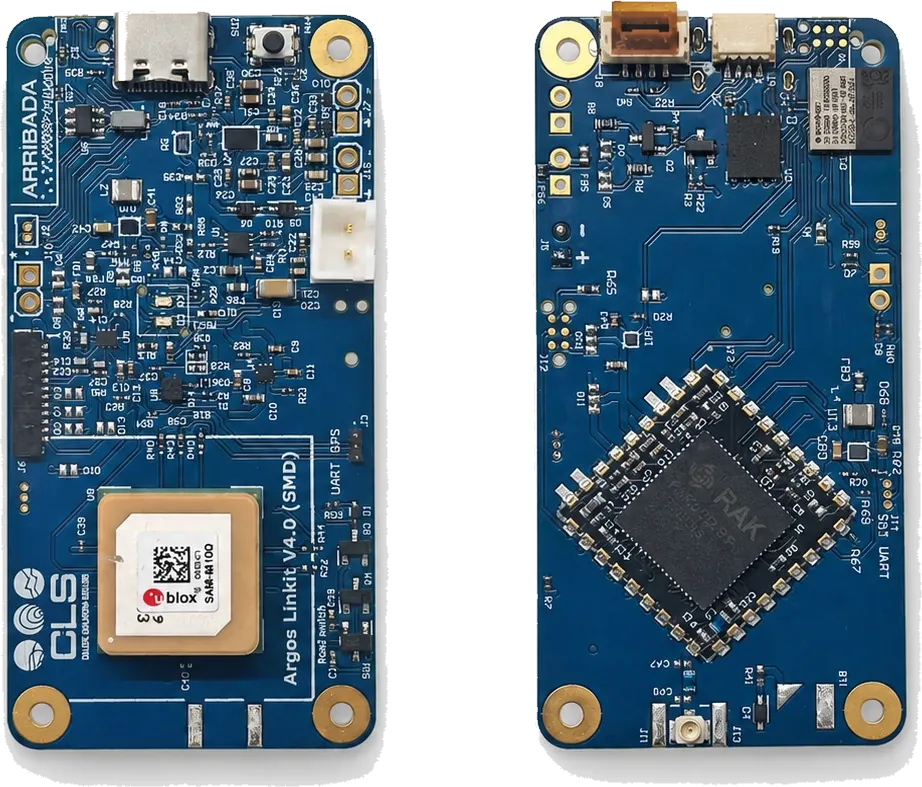
Linkit v4, top and bottom 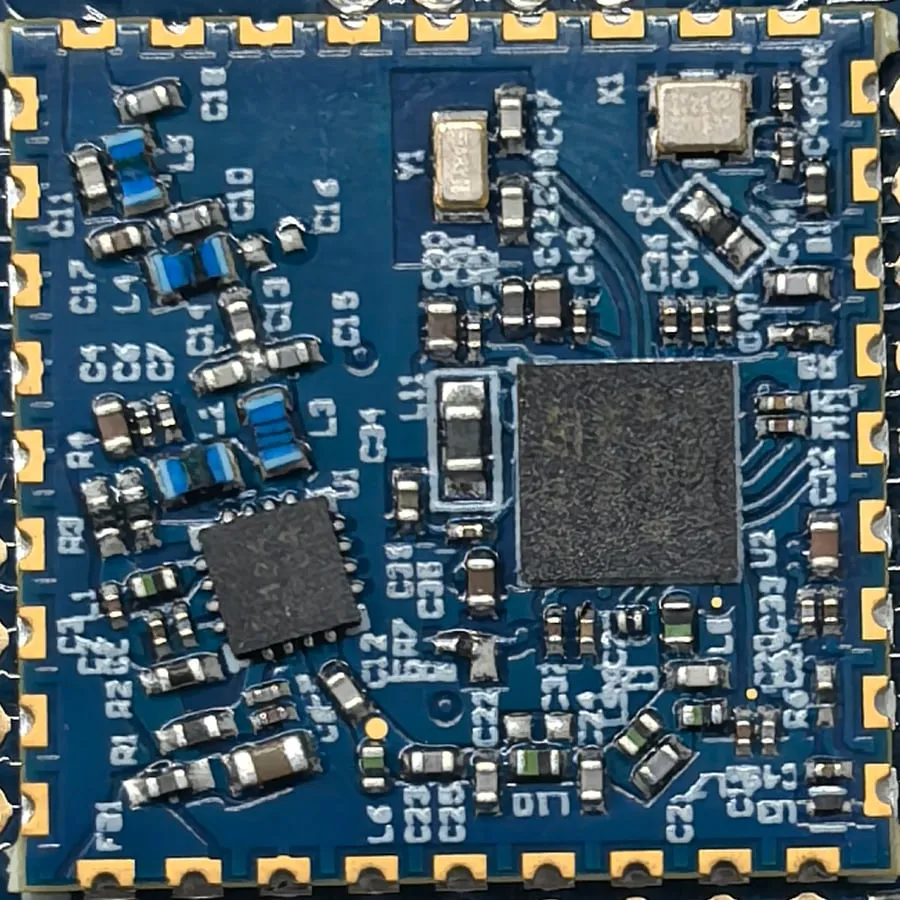
Argos SMD module, 2 × 2 cm 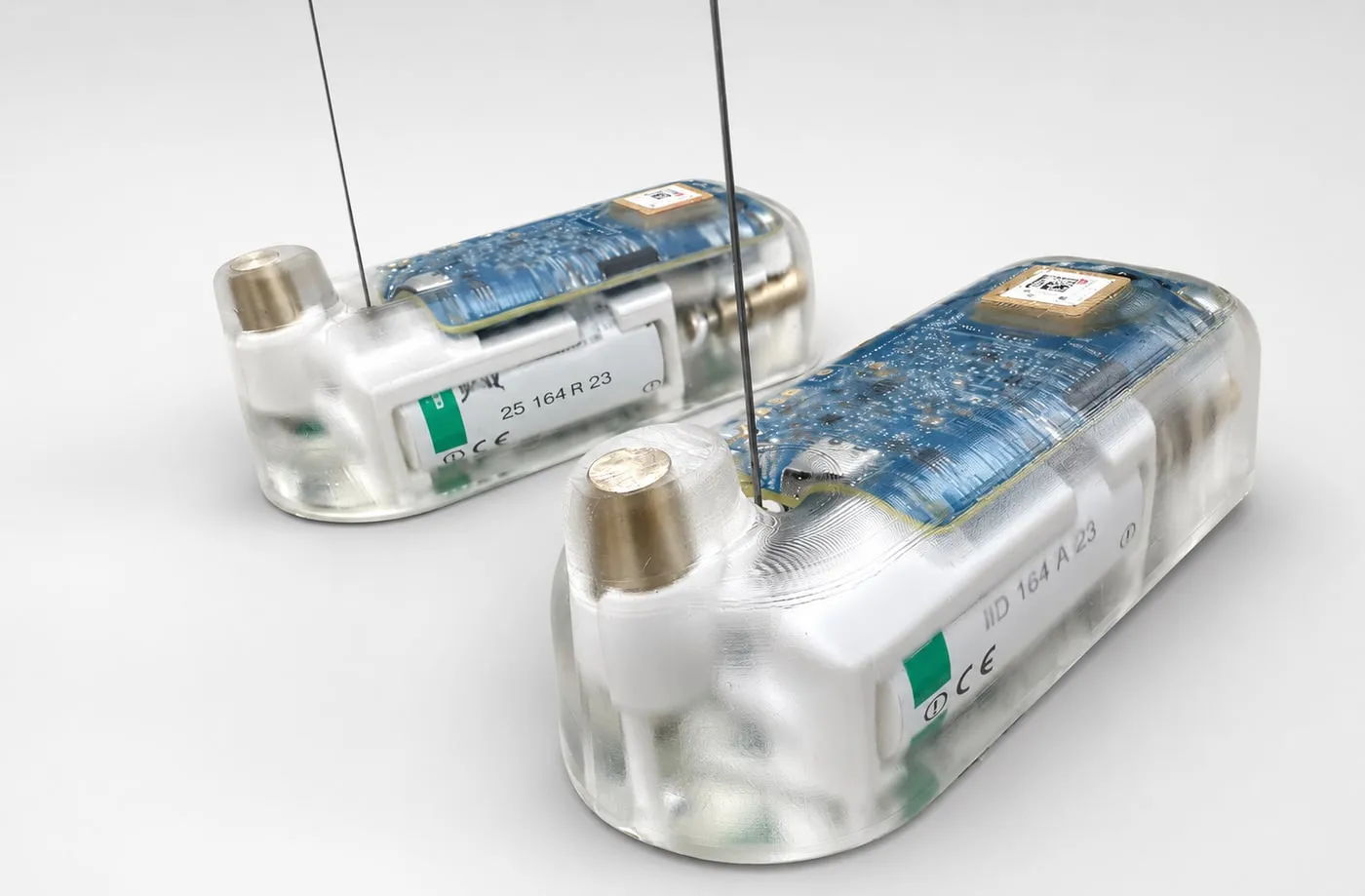
Sea turtle tag, sealed in epoxy 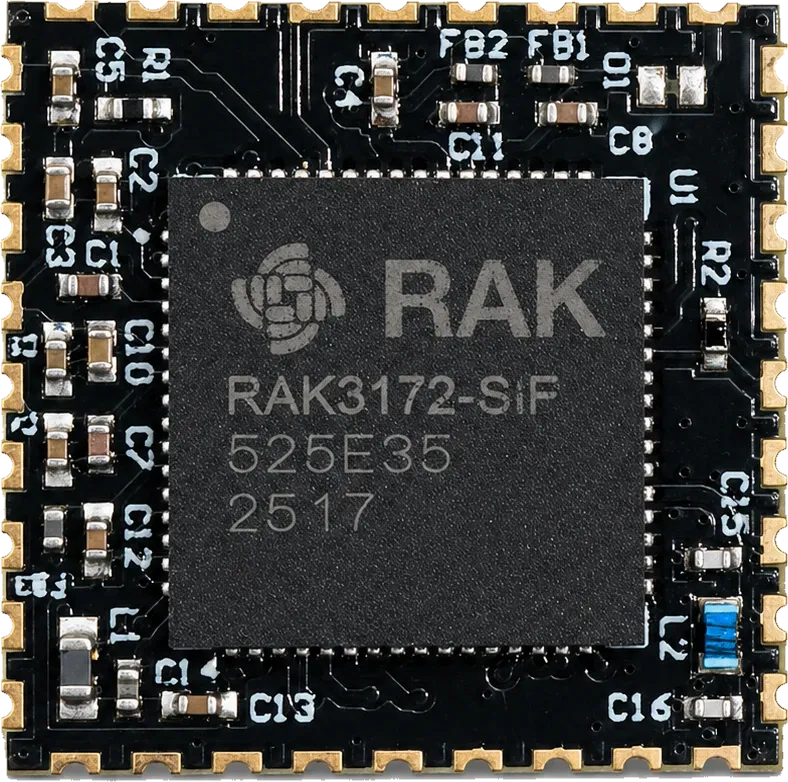
LoRa SMD module, 2 × 2 cm 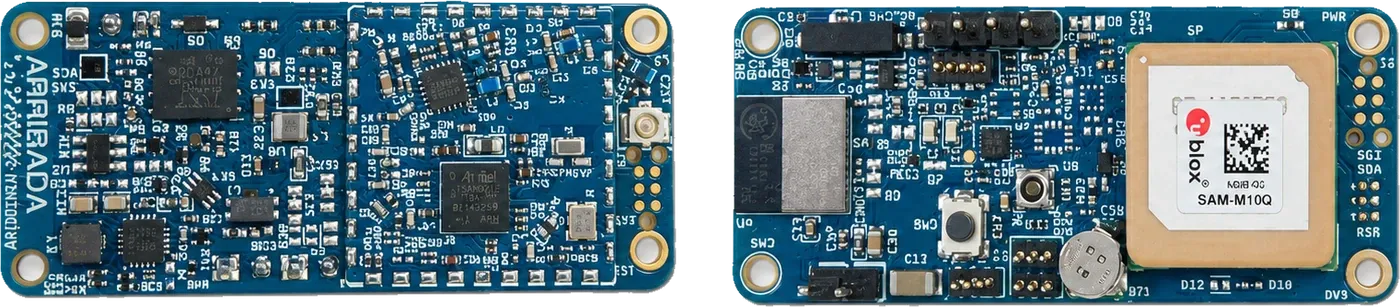
RSPB bird tracker boards 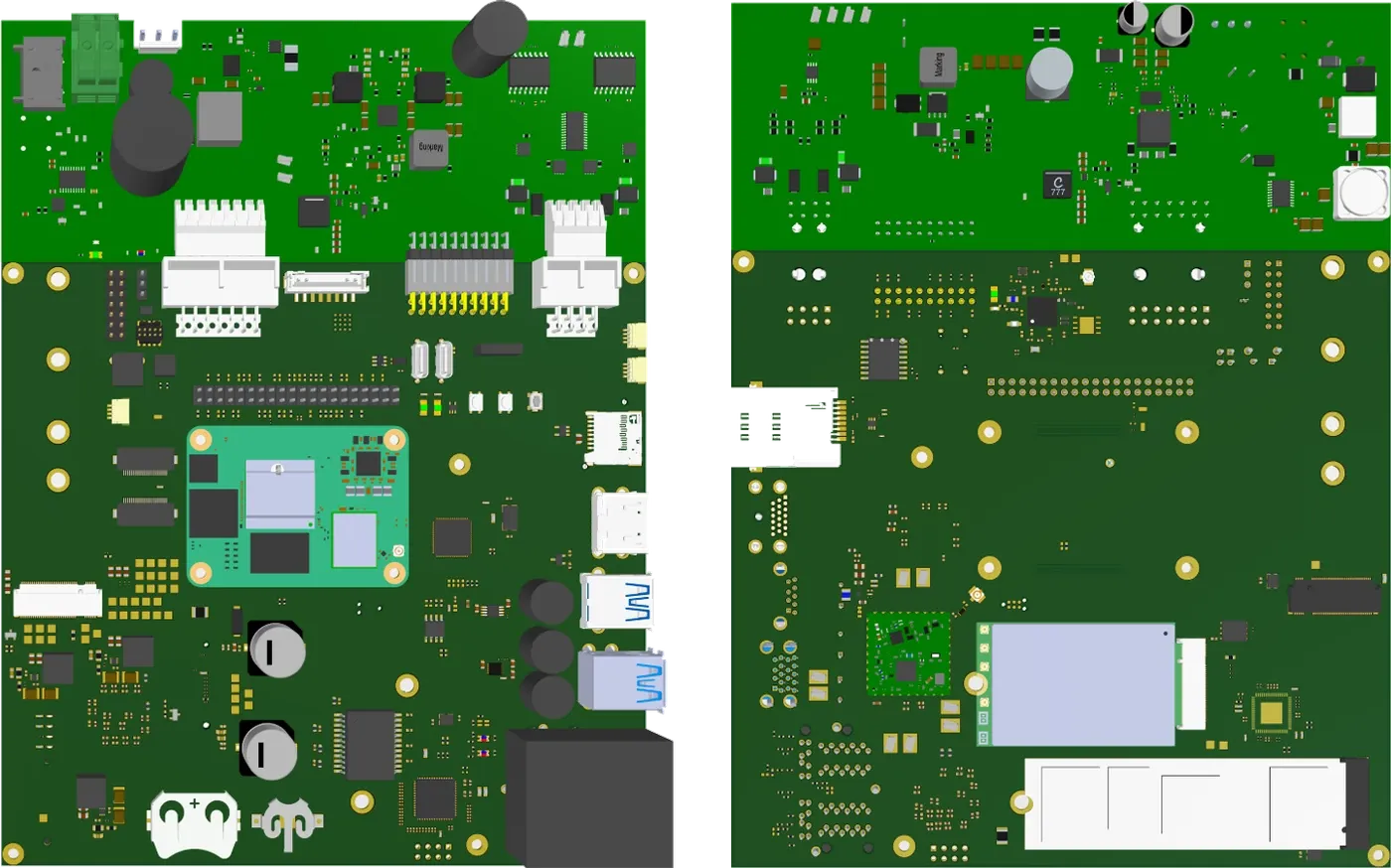
Marlin system: I/O and power boards, 3D render
Boards made for Arribada: photos by Arribada, renders from the design files.
Open source
- 01Linkit v4 satellite tracker
Open satellite tracker for Argos and Kinéis, made with CLS: the board on screen.
- 02Argos SMD module
A 2 × 2 cm satellite module pre-certified by CLS, with firmware, Zephyr driver and host boards.
- 03Surface and dive tracker
Argos tracker on a flex circuit with a built-in antenna; it transmits when it surfaces.
- 04LoRa 868 MHz modules
Two 2 × 2 cm LoRa modules, low or high power, interchangeable with the Argos module.
- 05Bird tracker with mortality detection
Argos bird tracker that flags when the animal stops moving, with its flexible solar panel support.
- 06Marlin system boards
Input-output board (PCIe, Ethernet) and 12/24 V power board around a Raspberry Pi CM5.
- 07Tracker management platform
Web and desktop app to configure trackers, estimate battery life and monitor their data.
Private: clients and employers
- 08Marine research
Instruments for research projects at sea.
- 09Handheld ultrasound scanner
Oscult: FPGA beamformer board, power board connected to an iPad, C firmware; EMC tests passed; ISO 13485, IEC 60601 and IEC 62304 practiced toward CE marking (in progress).
- 10Aircraft engine monitoring
Bearing vibration analysis on ARM and DSP.
- 11Railway station remote control
Software in Ada, industrial protocols in C++.
Other private projects: details and references on request.

One engineer, the whole board
CoXpert is one engineer: me, Geoffrey Fournier, independent since 2019. I do every review and every design myself, from schematic to field trial.
- Whole board
- CoXpert
- One person across board, radio and code: nothing falls between two teams.
- Boards
- Schematic, layout, production files
- Radio
- Antennas, RF chain, modules
- Software
- Firmware, drivers, tools
- Based in
- Réunion Island, France; remote work
- Education
- Engineering degree in embedded systems (ECE Paris); BSc in signal processing (Aalborg University)
- Time zone
- UTC+4: 2 to 3 h ahead of Paris, 3 to 4 h ahead of London, 1 h ahead of Nairobi
- Languages
- English, French
- Aerospace and railSafran; Systerel, for Alstom2013 · 2014
- Medical devicesOscadi2015 · 2018
- Wildlife tracking and marine researchCoXpert, independent; Arribada since 20232019
Registered in France: sole proprietor (entrepreneur individuel, micro-entreprise), SIREN 850 085 804.
Frequently asked questions
Do you sell ready-made trackers?
No: each device is designed and built for its project, even from a bare idea. Start with a call, then the fixed-price scoping phase described under Design and build; the open-source boards under Work show what has been built so far.
Another provider designed the board. Can you review it before production?
Yes: a board designed elsewhere starts with an in-depth review, whose report your team or the original designer can act on directly.
What does a project quote include?
The milestones, the deliverables and the number of prototype iterations. An extra iteration is quoted separately, as is prototype manufacturing (boards, parts, assembly). After delivery: a 3-month warranty (any defect in the delivered work fixed at no cost), then support billed for time spent or as a monthly plan.
Do you offer terms for NGOs or open-source projects?
On request: say so in your first message, with the project and what will be published.
Is the design ready for certification (CE, FCC)?
It is prepared for it from the schematic onward: RED, FCC and EMC requirements are taken into account. The compliance tests themselves are run by an accredited laboratory.
We work under ISO 13485. Can you meet our quality requirements?
Yes: the deliverables are written to your requirements (requirements, traceability, test reports, design reviews), and your quality system stays yours. ISO 13485, IEC 60601 and IEC 62304 were practiced on the Oscult ultrasound scanner, which passed its EMC tests.
Who pays for network subscriptions?
You do: satellite and network subscriptions (Argos, Kinéis, Iridium, LoRaWAN, cellular) are in your name, with the operator.
How is the work invoiced?
In euros, excluding VAT: by milestone for a project, on delivery for a review. VAT at 8.5 % for clients on Réunion Island, otherwise as your country’s rules require.
Who handles our files, and where?
Only me, with no subcontracting. I work in France (Réunion Island is a French department, under French and EU law), under NDA if you wish, and in your own tools and servers if your policy requires it (Altium Designer preferred).
You work alone: what if you are unavailable?
Sources and documentation are delivered at every milestone, in standard tools (Altium or KiCad, Git): another engineer can take over, and your project never depends on a file you do not have.
You are on Réunion Island: how do calls and prototypes work?
I set calls in your team’s working hours. Prototypes: when I build them as part of the project, I order them directly; when you build them, I cover shipping to my bench.
Do you design the enclosure?
No: the enclosure is designed by your mechanical team or by a partner mechanical designer. The board is laid out to fit it and delivered with its 3D model (STEP).
Can you run the field trials?
Yes, bench first, then in the field, with partners on Réunion Island or on your site. Travel costs are charged to the project.
A board to review, or a device to build?
Describe the project, its stage and timeline, with any files you can share; NDA first if needed. Then a call and a written quote.
I reply within 2 business days, with the earliest start date. My schedule is currently busy: tell me when you need the work.